.avif)

_logo%201.svg)


COLLEGE PARK, Md. (June 4, 2026) — A newly published randomized controlled trial from the University of Maryland School of Medicine is drawing national attention after researchers found that just five minutes of in-person Christian prayer significantly reduced pain and anxiety among primary care patients when compared to a music-based control group.
The study, published in the May/June 2026 edition of Annals of Family Medicine, evaluated 180 adults experiencing clinically significant pain, anxiety, or both. Researchers concluded that a brief session of what they called proximal intercessory prayer (PIP)—prayer offered in person by trained volunteers—produced measurable benefits that persisted for weeks in some participants.
Prayer and Anxiety Relief: What Researchers Found
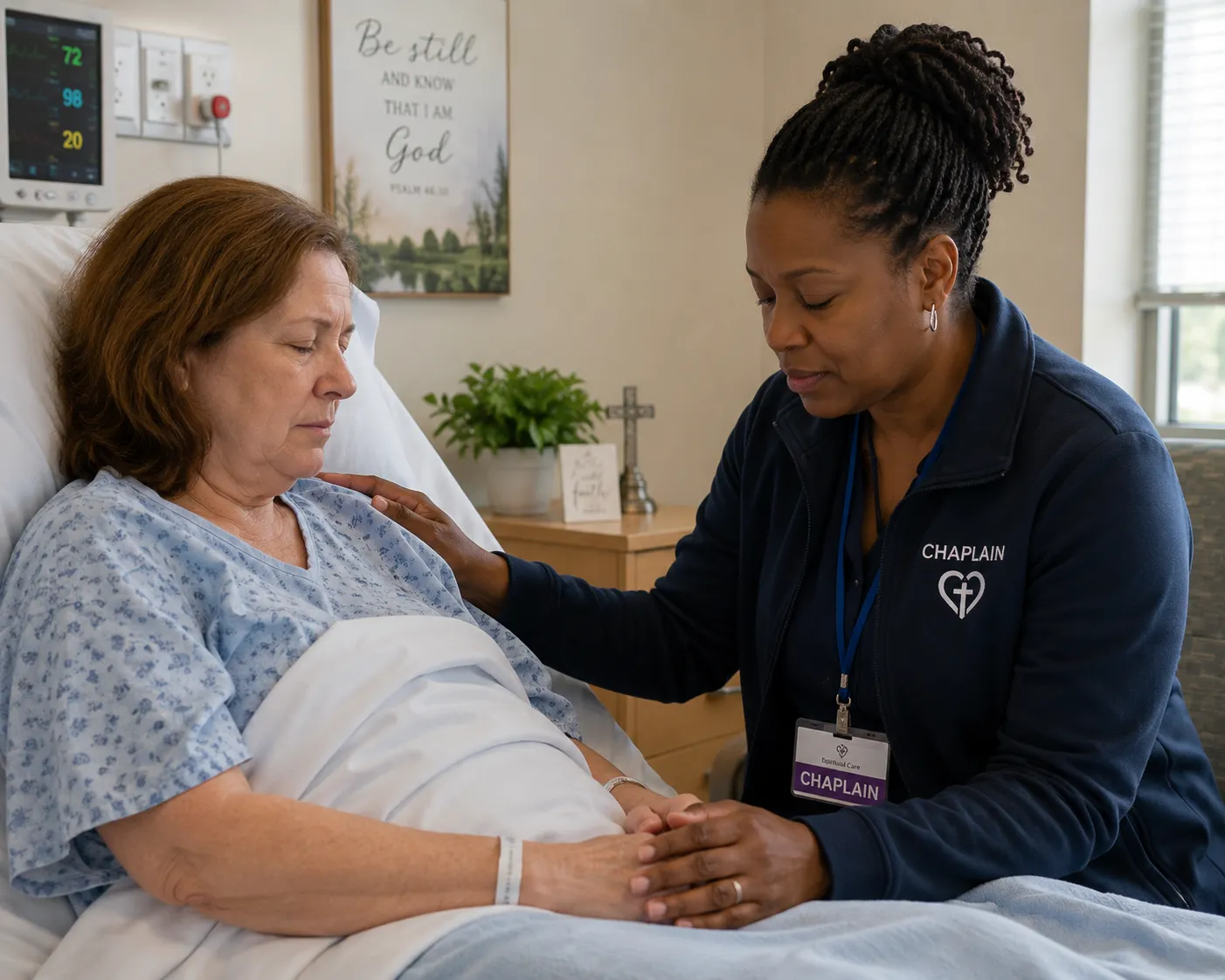
Participants were recruited from a University of Maryland family medicine practice and were randomly assigned to one of two groups following their medical appointments. One group received five minutes of Christian intercessory prayer that included laying-on-of-hands, while the control group listened to five minutes of soft music.
Researchers followed participants at two weeks and six weeks after treatment.
What Happened After Five Minutes of Prayer
According to the University of Maryland School of Medicine and Annals of Family Medicine:
- Prayer recipients experienced greater reductions in pain immediately after treatment.
- Pain improvements remained significant at the two-week follow-up.
- Anxiety reductions were significant immediately after prayer and remained measurable at both two and six weeks.
- No adverse events were reported.
- Ninety-seven percent of participants were neutral, agreeable, or strongly agreeable to having prayer available during future medical visits.
Medical Xpress reported that the findings suggest prayer may serve as a practical, low-cost, non-pharmacological complement to conventional healthcare, particularly among underserved populations.
Lead Researchers Highlight Clinical Significance
Lead author Dr. Katherine Jacobson, Assistant Professor of Family and Community Medicine at the University of Maryland School of Medicine, emphasized the practical implications of the findings.
“Proximal intercessory prayer was safe, effective, and well-received as complementary treatment for pain and anxiety. It may be a low-cost, non-pharmacologic, effective adjunct to standard care with particular relevance for underserved populations.”
— Dr. Katherine Jacobson, University of Maryland School of Medicine
Researchers also found that the prayer intervention appeared beneficial regardless of a participant's religious background.
According to News-Medical, co-author Dr. Joshua W. Brown, Professor of Psychological and Brain Sciences at Indiana University and Director and Co-Founder of the Global Medical Research Institute, stated:
“The prayer intervention was effective regardless of the patient's faith or no faith.”
Additional Study Context
The trial was registered with ClinicalTrials.gov under identifier NCT07565142 and received approval from the University of Maryland Baltimore Institutional Review Board. Funding was provided through a Global Medical Research Institute MESH Grant.
Why This Christian Prayer Study Matters
Prayer remains the most commonly used form of complementary medicine in America. According to researchers cited by the University of Maryland School of Medicine, approximately 43% of Americans report using prayer as a complementary health practice, with 62% of those individuals identifying as Christian.
The study's authors note that rigorous randomized trials examining in-person prayer interventions have been relatively rare despite widespread use. The published trial is among the largest and most structured investigations of its kind conducted in a primary care setting.
Considering the Findings Through Faith
While scientific studies can measure health outcomes, Christians understand prayer first and foremost as communion with God rather than merely a therapeutic technique.
Scripture reminds believers:
“The prayer of a righteous person is powerful and effective” (James 5:16, NIV).
From a Christian perspective, many believers view this study as one more example of the ways God may work through prayer, while recognizing that scientific findings do not prove spiritual realities. Rather, they may provide evidence consistent with what Christians have long practiced and believed.
Take Action: Pray for America’s Healthcare Workers
As conversations about faith and health continue, join believers across the nation in praying for patients, physicians, nurses, chaplains, and caregivers.
Post a prayer today in America's Prayer Room.
Find upcoming prayer gatherings and revival events.
Pray with us:
"Lord, grant wisdom to healthcare professionals, comfort to those suffering from pain and anxiety, and draw many people to seek You in prayer. In Jesus' Name, Amen."

Faith Evans Pearson
Faith Evans Pearson is the AWAKE America Community Manager, progressing the ministry’s mission through creative strategy, social media, digital campaigns, and content—to boldly share the Truth of the Gospel, equip the saints, and encourage believers in the US and abroad.


.png)