.avif)


_logo%201.svg)


The Great Awakenings in America: How Spiritual Revival Changed a Nation
Throughout history, political events often dominate the narrative of a nation. Wars, elections, and legislation usually fill the pages of history books. Yet beneath these visible events, deeper forces often shape the direction of societies.
One of the most powerful forces in American history has been spiritual revival.
At several critical moments in the nation’s past, movements of repentance, prayer, and Gospel proclamation swept across the country. These seasons of renewal became known as the Great Awakenings.
They did more than increase church attendance.
They transformed lives, strengthened Biblical conviction, and reshaped the moral and cultural direction of the nation.
The First Great Awakening (1730s–1740s)
The First Great Awakening was the first major revival movement in American history.
During the early eighteenth century, many colonial churches had grown spiritually stagnant. While religious institutions remained active, genuine spiritual transformation had declined.
God raised up powerful preachers who boldly proclaimed the Gospel and called people to repentance.
“God is dreadfully provoked… it is nothing but His hand that holds you from falling into the fire every moment.” — Jonathan Edwards
Jonathan Edwards and the Call to Repentance
Edwards became one of the most influential voices of the First Great Awakening.
His preaching emphasized:
• The holiness of God
• The seriousness of sin
• The reality of divine judgment
• The necessity of salvation through Jesus Christ
His well-known sermon “Sinners in the Hands of an Angry God” confronted listeners with the urgency of repentance and faith.
Edwards taught that true revival must produce genuine spiritual transformation, not emotional enthusiasm alone.
George Whitefield and Mass Evangelism
Whitefield helped spread the revival across the American colonies.
“You must be born again.” — George Whitefield
Preaching in open fields and city squares, Whitefield proclaimed the Gospel to crowds that often reached tens of thousands.
His central message focused on the new birth—the Biblical teaching that every person must be spiritually regenerated through Christ.
Whitefield’s preaching united people across denominational lines and helped spread revival throughout the colonies.
Cultural Impact of the First Great Awakening
The First Great Awakening had profound influence on colonial society.
Many people experienced genuine conversion. Churches were renewed, and new Christian colleges were established to train pastors and leaders.
Some historians believe this revival also strengthened ideas of moral responsibility, liberty under God, and resistance to tyranny, which later influenced the American Revolution.
The Second Great Awakening (Early 1800s)
After the Revolutionary War, America expanded rapidly westward. Frontier communities often lacked churches and spiritual leadership.
But revival returned.
The Second Great Awakening spread through prayer meetings, itinerant preaching, and frontier camp meetings where thousands gathered to hear the Gospel.
“A revival is nothing else than a new beginning of obedience to God.” — Charles Finney
These gatherings sometimes lasted several days as preachers proclaimed repentance and salvation through Christ.
Key Leaders of the Second Great Awakening
The movement was not led by a single individual but was shaped by several prominent revivalists, including:
• Charles Finney – known for revival meetings and an emphasis on personal decision and moral reform
• Barton W. Stone – a leader in the Cane Ridge revival and the Restoration Movement
• Peter Cartwright – a Methodist circuit rider who preached across the frontier
Together, these men helped spread revival across expanding America, especially through camp meetings and itinerant preaching.
The Message of the Second Awakening
The preaching of this revival emphasized:
• Personal conversion
• The authority of the Bible
• The transforming power of salvation
• The call to holy living
Church membership grew dramatically across the young nation.
Cultural Influence of the Second Great Awakening
Spiritual renewal during this period influenced many aspects of American culture.
Christians impacted by revival became active in movements addressing:
• Education
• Missions
• Social compassion
• Moral reform
The Second Great Awakening demonstrated that spiritual revival within the church often produces wider cultural change.
The Third Great Awakening (Late 1800s)
By the late nineteenth century, the United States was undergoing massive change.
Industrialization transformed cities. Immigration surged. Social challenges increased.
During this time, a new generation of evangelists began proclaiming the Gospel to urban populations.
“The world has yet to see what God will do with a man fully consecrated to Him.” — Dwight L. Moody
Dwight L. Moody and Evangelistic Revival
Evangelist Dwight L. Moody played a central role in this era of revival.
Although not part of the First Great Awakening, Moody’s ministry reflects the same unwavering commitment to Gospel proclamation that marked earlier revivals.
His message focused on:
• Salvation through Jesus Christ
• The authority of the Bible
• The urgency of evangelism
Moody’s preaching reached vast audiences in both America and Europe and helped ignite renewed evangelistic fervor in the late nineteenth century.
The Global Mission Movement
This period also produced tremendous missionary expansion.
New organizations were founded to spread the Gospel worldwide, establish Bible institutes, and provide humanitarian aid.
The Third Great Awakening reinforced the truth that Biblical faith transforms both individuals and societies.
The Evangelistic Revival of the Twentieth Century
During the twentieth century, another powerful evangelistic movement influenced American society.
“The cross tells us that God understands our sin and yet loves us.” — Billy Graham
Billy Graham and Global Evangelism
Evangelist Billy Graham became one of the most widely recognized Christian leaders of the modern era.
His message remained remarkably consistent:
• Humanity’s universal sinfulness
• Salvation through the death and resurrection of Jesus Christ
• The authority of Scripture
• The call to repentance and faith
Through stadium crusades, radio broadcasts, television, and global evangelistic campaigns, Graham preached the Gospel to hundreds of millions of people worldwide.
Cultural Influence in Post-War America
Following World War II, church attendance increased significantly across the United States.
Christian faith remained influential in many areas of American public life during the mid-twentieth century.
While scholars debate whether this era qualifies as a formal “Great Awakening,” the evangelistic movement undeniably shaped American spiritual culture.
What Are the Common Marks of Spiritual Revival?
Across these awakenings, several consistent characteristics appear.
True revival typically includes:
• Bold proclamation of Biblical Truth
• Deep conviction of sin
• Genuine repentance and personal conversion
• Renewed commitment to Scripture
• Transformed lives that influence families and communities
Revival does not begin through political power. It begins when believers seek God in prayer and faithfully proclaim the Gospel.
Can Revival Happen Again in America?
Today many Americans recognize that the nation faces deep spiritual and cultural challenges.
Church attendance has declined. Moral confusion has increased. Many institutions no longer reflect a Biblical worldview.
Yet history offers a powerful reminder.
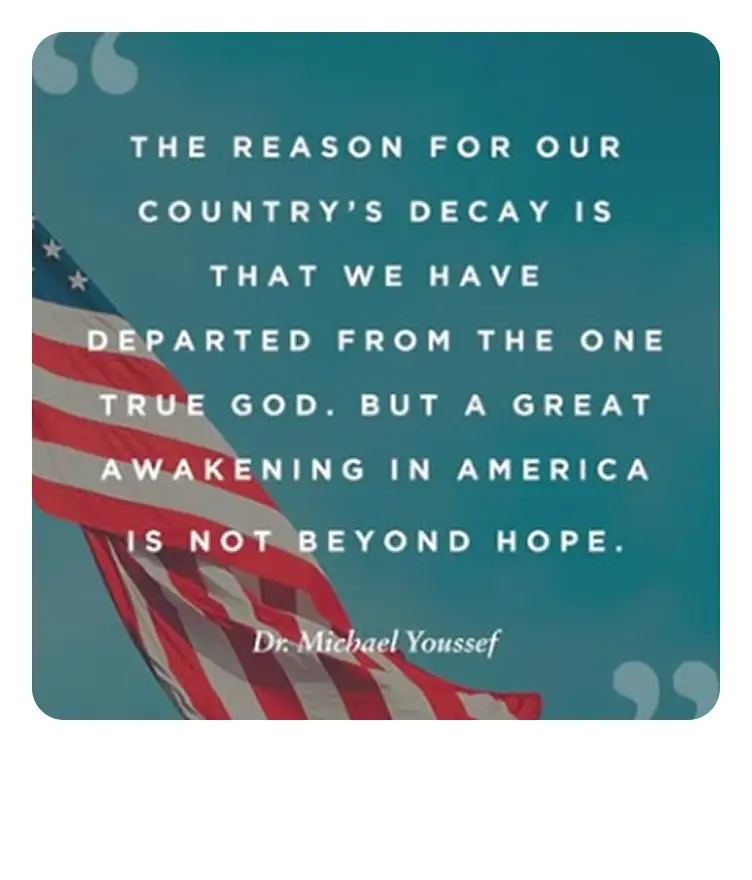
Nearly every major spiritual awakening in America began during times of spiritual decline. Revival often appears when circumstances seem darkest.
As explored in Was America Founded as a Christian Nation? and Two Hundred Fifty Years Later: Will America Remember the God Who Gave Her Liberty?, the future of the nation may depend less on political movements and more on spiritual renewal.
Because when God awakens hearts, entire cultures can change.

Faith Evans Pearson
Faith Evans Pearson is the AWAKE America Community Manager, progressing the ministry’s mission through creative strategy, social media, digital campaigns, and content—to boldly share the Truth of the Gospel, equip the saints, and encourage believers in the US and abroad.